
Use our Ideal Weight Calculator to determine your perfect weight based on height, age, and gender. Achieve your fitness goals and maintain a healthy lifestyle.
Your Ideal Weight Range
Basic Information
Height:
Gender:
Ideal Weight Results
Ideal Weight Range:
Health Insights
Recommendations
Determining your ideal weight is more than just a number on a scale—it’s about finding a healthy weight range that supports your overall wellbeing. Our Ideal Weight Calculator helps you understand what weight range might be appropriate for your height, gender, age, and body frame, using scientifically-backed formulas. While no single calculation can determine the perfect weight for everyone, these tools provide valuable insights into healthy weight goals.
Why Your Ideal Weight Matters for Health
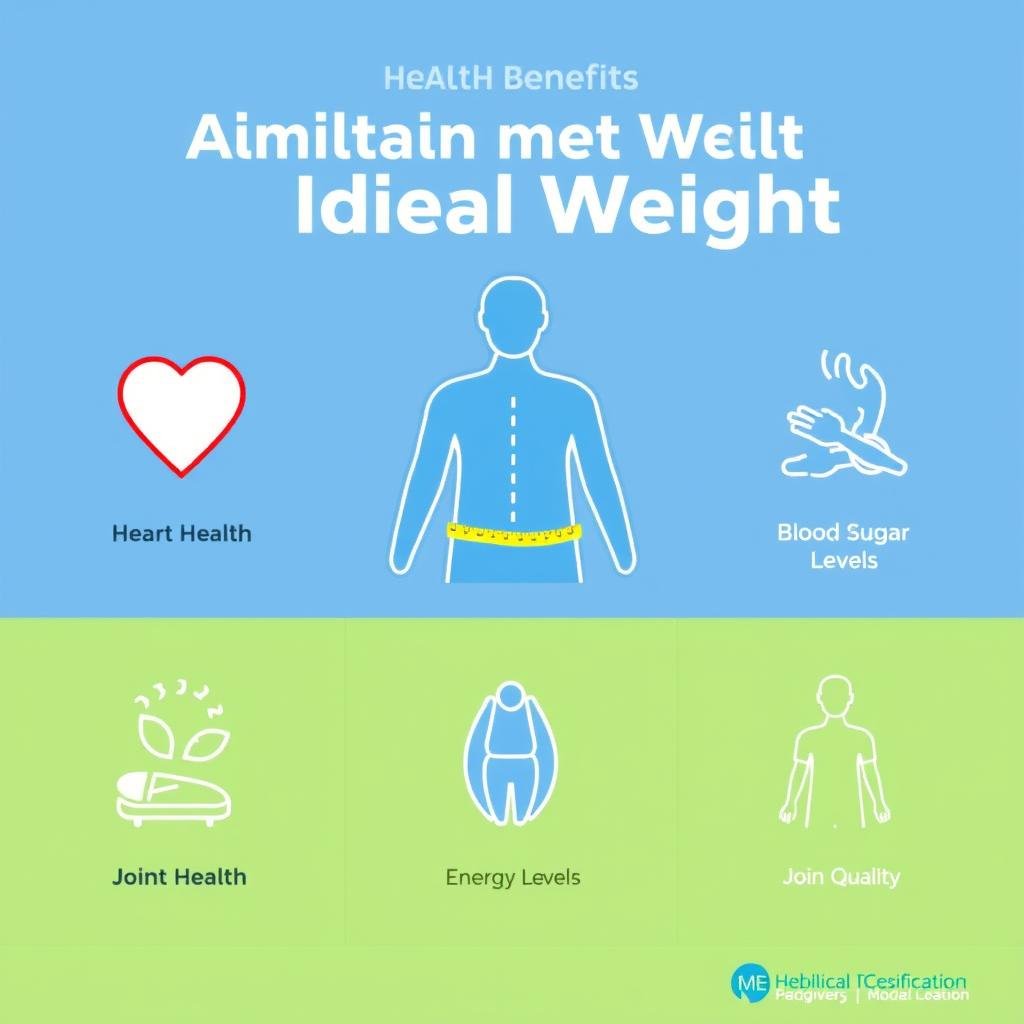
Maintaining a weight within a healthy range is associated with numerous health benefits. Research shows that staying within these ranges can reduce your risk of developing conditions like heart disease, type 2 diabetes, high blood pressure, and certain cancers.
However, it’s important to understand that ideal weight is not about appearance or conforming to societal standards. Instead, it’s a health indicator that, along with other metrics, can help guide your wellness journey.
Benefits of Maintaining a Healthy Weight
- Reduced risk of cardiovascular disease
- Better blood sugar control
- Improved joint health and mobility
- Enhanced energy levels and mood
- Better sleep quality
- Reduced strain on organs and body systems
Understanding Different Ideal Weight Calculation Methods
Several formulas have been developed to estimate ideal body weight. Each uses different approaches and may give slightly different results. Understanding these methods can help you interpret your results more effectively.
Common Ideal Weight Calculation Formulas
| Formula | For Men | For Women | Year Developed |
| Devine Formula | 50 kg + 2.3 kg per inch over 5 feet | 45.5 kg + 2.3 kg per inch over 5 feet | 1974 |
| Hamwi Formula | 48 kg + 2.7 kg per inch over 5 feet | 45.5 kg + 2.2 kg per inch over 5 feet | 1964 |
| Robinson Formula | 52 kg + 1.9 kg per inch over 5 feet | 49 kg + 1.7 kg per inch over 5 feet | 1983 |
| Miller Formula | 56.2 kg + 1.41 kg per inch over 5 feet | 53.1 kg + 1.36 kg per inch over 5 feet | 1983 |
| BMI-Based Range | BMI between 18.5-24.9 | BMI between 18.5-24.9 | WHO standard |
Body Mass Index (BMI)
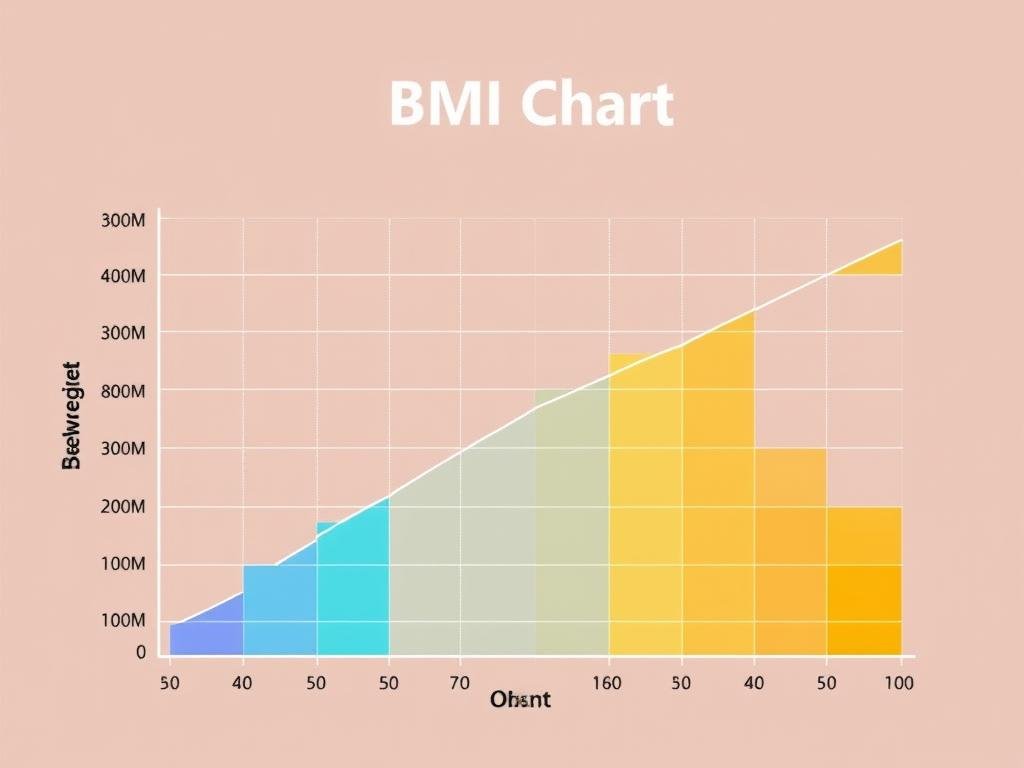
BMI is another common method used to assess weight status. It’s calculated by dividing your weight in kilograms by your height in meters squared. While BMI doesn’t directly calculate ideal weight, it provides weight ranges considered healthy.
BMI Categories:
- Below 18.5: Underweight
- 18.5 to 24.9: Normal weight
- 25 to 29.9: Overweight
- 30 and above: Obese
Using BMI, you can calculate a healthy weight range by determining what weight would put you in the 18.5-24.9 BMI category for your height.
How to Use the Ideal Weight Calculator
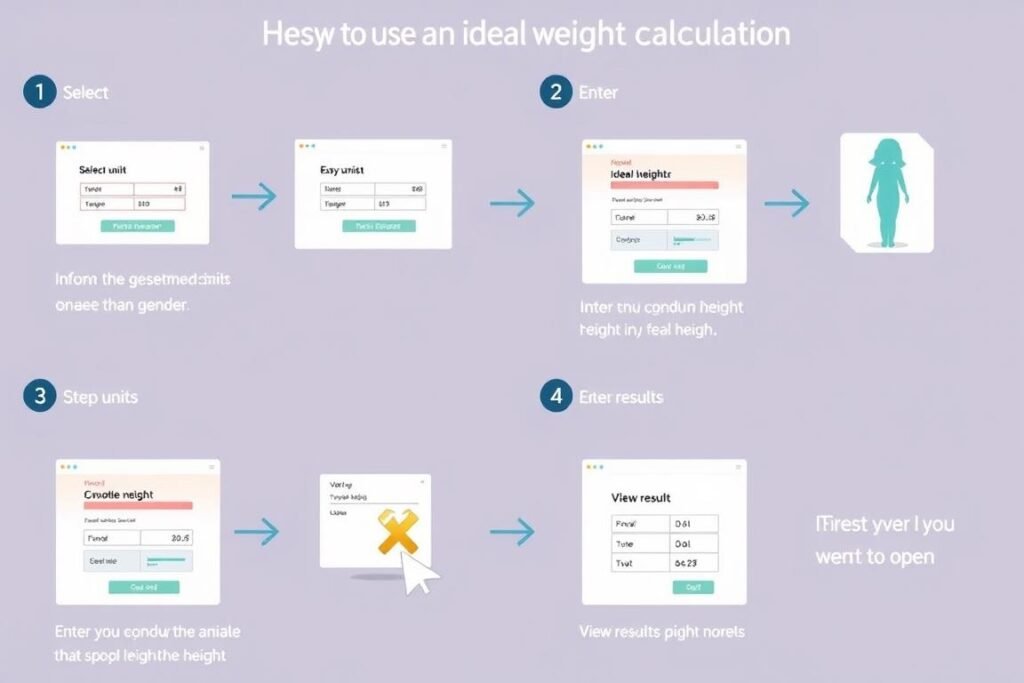
Our Ideal Weight Calculator is designed to be simple and user-friendly. Follow these steps to get your results:
- Select your preferred unit system (metric or imperial)
- Enter your gender (male or female)
- Input your height
- Review your results from multiple calculation methods
- Compare your current weight with the calculated ideal ranges
Calculate Your Ideal Weight Now
Get instant results using multiple scientific formulas to find your healthy weight range based on your height and gender.
Interpreting Your Results
When you receive your results, you’ll notice different values from each formula. This variation is normal and reflects the fact that ideal weight is not an exact science. Consider these results as a general guideline rather than a strict target.
Remember that the calculated ideal weight is an estimate based on population averages. Your personal ideal weight may differ based on factors not accounted for in these formulas, such as muscle mass, body composition, and overall health status.
Factors That Affect Your Ideal Weight
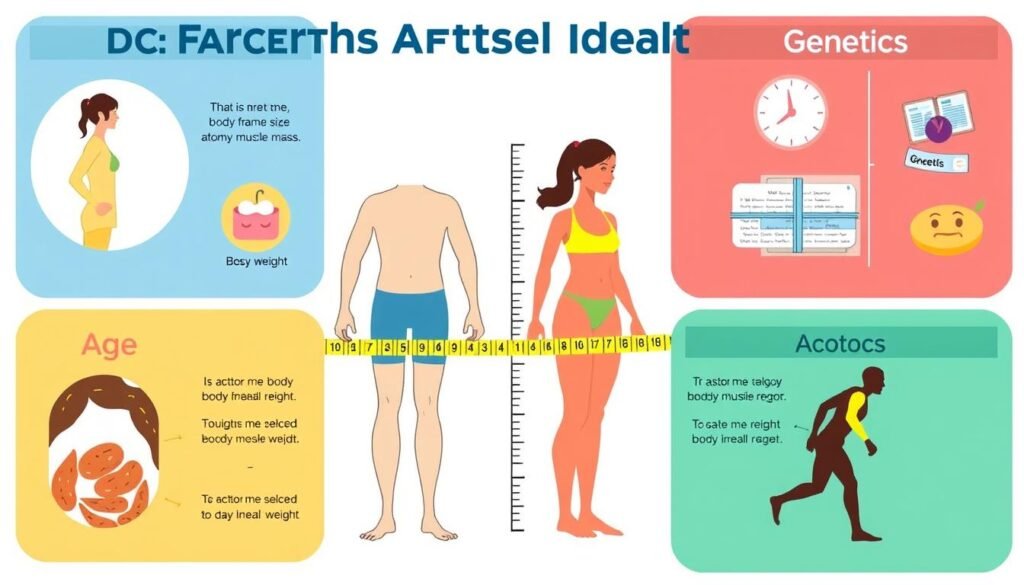
Many factors beyond height and gender influence what weight is healthiest for you. Understanding these factors can help you interpret calculator results in the context of your unique circumstances.
Age
Body composition naturally changes with age. Muscle mass tends to decrease while body fat increases, even if weight remains stable. This means ideal weight ranges may shift slightly as you age.
Body Frame Size
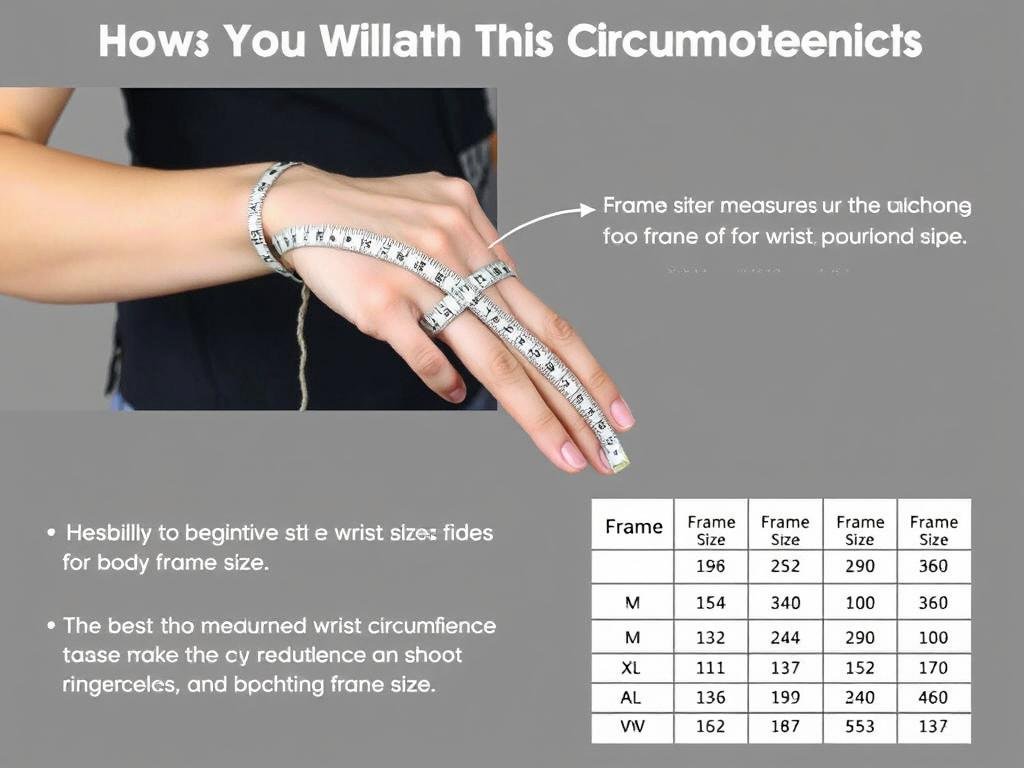
People with larger bone structures may naturally weigh more than those with smaller frames, even at the same height. Frame size can be estimated by measuring wrist circumference in relation to height.
Muscle Mass
Muscle is denser than fat. Athletes and those with higher muscle mass may weigh more than the calculated ideal but still have healthy body composition.
Determining Your Body Frame Size
Your body frame size can help you adjust your ideal weight expectations. Here’s how to determine your frame size:
| Height | Small Frame (Wrist Size) | Medium Frame (Wrist Size) | Large Frame (Wrist Size) |
| Women under 5’2″ | Less than 5.5″ | 5.5″ to 5.75″ | Over 5.75″ |
| Women 5’2″ to 5’5″ | Less than 6″ | 6″ to 6.25″ | Over 6.25″ |
| Women over 5’5″ | Less than 6.25″ | 6.25″ to 6.5″ | Over 6.5″ |
| Men over 5’5″ | 5.5″ to 6.5″ | 6.5″ to 7.5″ | Over 7.5″ |
Healthy Weight Ranges for Different Heights
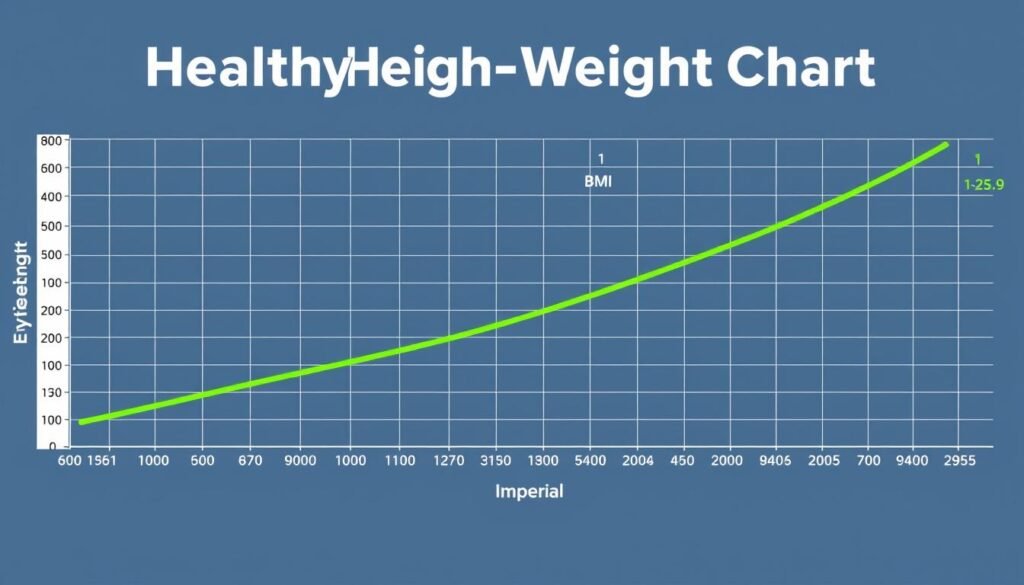
The table below provides a general guide to healthy weight ranges based on height, using BMI calculations for adults. Remember that these are general guidelines and individual factors should be considered.
| Height | Normal Weight Range (BMI 18.5-24.9) | Overweight Range (BMI 25-29.9) |
| 5’0″ (152 cm) | 97-123 lbs (44-56 kg) | 128-148 lbs (58-67 kg) |
| 5’3″ (160 cm) | 107-135 lbs (49-61 kg) | 141-168 lbs (64-76 kg) |
| 5’6″ (168 cm) | 118-148 lbs (54-67 kg) | 155-185 lbs (70-84 kg) |
| 5’9″ (175 cm) | 128-162 lbs (58-73 kg) | 169-202 lbs (77-92 kg) |
| 6’0″ (183 cm) | 140-177 lbs (64-80 kg) | 184-220 lbs (83-100 kg) |
| 6’3″ (191 cm) | 152-192 lbs (69-87 kg) | 200-239 lbs (91-108 kg) |
For a more personalized assessment, use our calculator which takes into account additional factors beyond just height and weight.
Limitations of Ideal Weight Calculations
While ideal weight calculators provide useful guidelines, they have several limitations you should be aware of when interpreting results.
What Calculators Don’t Consider
- Body composition: The ratio of fat to muscle in your body
- Fat distribution: Where fat is stored on your body (abdominal vs. peripheral)
- Fitness level: Athletes may have higher muscle mass and healthy weights above calculated ideals
- Ethnic differences: Different populations may have different healthy weight ranges
- Individual health factors: Medical conditions that affect weight or metabolism
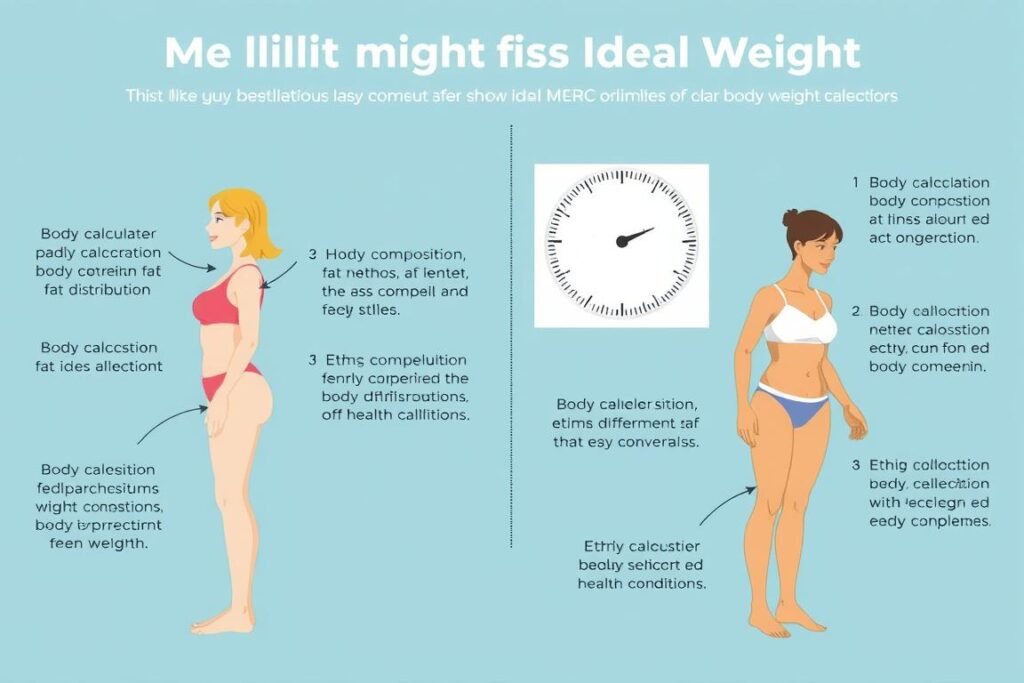
Remember that ideal weight calculators provide estimates based on population averages. They are not a substitute for personalized medical advice or a comprehensive health assessment by a healthcare professional.
When to Seek Professional Guidance
Consider consulting a healthcare provider for personalized weight guidance if:
- You have existing health conditions that affect weight
- You’re an athlete or have significantly higher muscle mass
- You’re pregnant or breastfeeding
- You’re under 18 or over 65 years old
- You’ve experienced significant unintentional weight changes
Tips for Achieving and Maintaining a Healthy Weight
If you’re working toward reaching your ideal weight range, these evidence-based strategies can help you achieve and maintain a healthy weight in a sustainable way.

Nutrition Strategies
- Focus on whole, unprocessed foods
- Include plenty of fruits and vegetables
- Choose lean proteins and healthy fats
- Practice portion awareness
- Stay hydrated with water
- Limit added sugars and highly processed foods
Physical Activity
- Aim for 150+ minutes of moderate activity weekly
- Include both cardio and strength training
- Find activities you enjoy
- Break up sitting time throughout the day
- Start gradually and build consistency
- Consider working with a fitness professional
Lifestyle Habits
- Prioritize quality sleep (7-9 hours)
- Manage stress effectively
- Track progress beyond the scale
- Build a supportive social environment
- Practice mindful eating
- Set realistic, sustainable goals

“The best approach to weight management focuses on sustainable lifestyle changes rather than short-term diets. Small, consistent changes to nutrition, physical activity, and daily habits lead to lasting results.”
Understanding Your Personal Ideal Weight
Your ideal weight is a range rather than a single number, and it’s influenced by many factors beyond what calculators can measure. Use the results from our Ideal Weight Calculator as a starting point, but remember that overall health indicators—like energy levels, lab values, and how you feel—are more important than achieving a specific number on the scale.

Take the Next Step in Your Health Journey
For personalized guidance on your ideal weight and health goals, consult with a healthcare professional who can consider your unique circumstances.
Remember that health comes in many sizes, and the number on the scale is just one of many indicators of wellbeing. Focus on developing sustainable healthy habits that improve your quality of life, regardless of whether you perfectly match a calculated ideal weight.