
Use our BMI Calculator Army to check if you meet military body composition standards. Fast, accurate, and based on Army guidelines.
Your Army BMI & Body Fat Report
Basic Information
Age:
Gender:
Height:
Weight:
BMI Results
BMI:
Category:
Army Status:
Body Fat (U.S. Army AR 600-9)
Body Fat %:
Allowed Max:
Army Result:
Health Insights
Recommendations
The U.S. Army maintains strict body composition standards to ensure soldiers are physically prepared for the demands of military service. Unlike civilian BMI calculations, the Army uses specialized methods to assess body fat percentage and physical readiness. This comprehensive guide explains how the Army BMI calculator works, current standards by age and gender, and practical strategies to meet these requirements.
Why Army BMI Standards Matter for Military Service
The Army's body composition standards serve multiple critical purposes. First, they ensure soldiers maintain the physical capability to perform their duties effectively. Combat readiness requires strength, endurance, and mobility that can be compromised by excessive body fat. Second, these standards promote overall health, reducing the risk of conditions like heart disease, diabetes, and joint problems that could impact military readiness.
Meeting Army BMI standards is mandatory for enlistment, continued service, and career advancement. Soldiers who fail to meet these requirements may face administrative action, including enrollment in the Army Body Composition Program (ABCP), restrictions on promotions, or even separation from service in severe cases.
Ready to Check Your Army Body Composition?
Use our official Army body fat calculator to see if you meet military standards.
How the Army BMI Calculator Differs from Standard BMI
The Army's approach to body composition assessment differs significantly from standard civilian BMI calculations. While civilian BMI simply uses height and weight to categorize individuals, the Army employs a more nuanced method that accounts for differences in body composition.
Standard BMI Calculator
- Uses only height and weight measurements
- Same formula for all individuals regardless of gender
- Cannot distinguish between muscle and fat
- Formula: BMI = weight(kg) / height²(m)
- Categorizes as underweight, normal, overweight, or obese
Army BMI Calculator
- Uses height, weight, and body circumference measurements
- Different formulas for men and women
- Estimates actual body fat percentage
- Accounts for age differences with varying standards
- Determines military service eligibility
The Army's method is designed to accommodate individuals with higher muscle mass who might be incorrectly classified as overweight by standard BMI calculations. This approach recognizes that military personnel often have above-average muscle development due to physical training requirements.
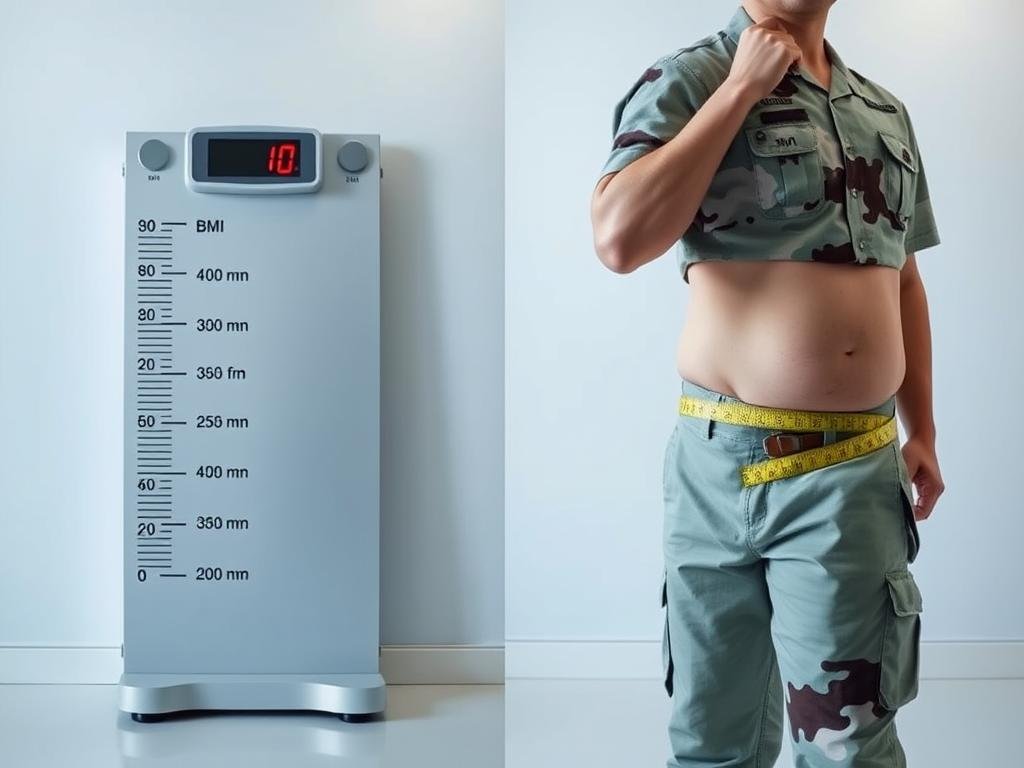
Army Body Fat Percentage Calculations: The Tape Test
In 2023, the Army introduced a simplified "one-site tape test" to replace the previous multi-site method. This new approach improves accuracy and reduces the misclassification of muscular soldiers as exceeding body fat standards.
The New One-Site Tape Test (2023-Present)
The current Army body fat assessment requires just two measurements:
- Weight measurement (in pounds)
- Waist/abdomen circumference at the belly button level (in inches)
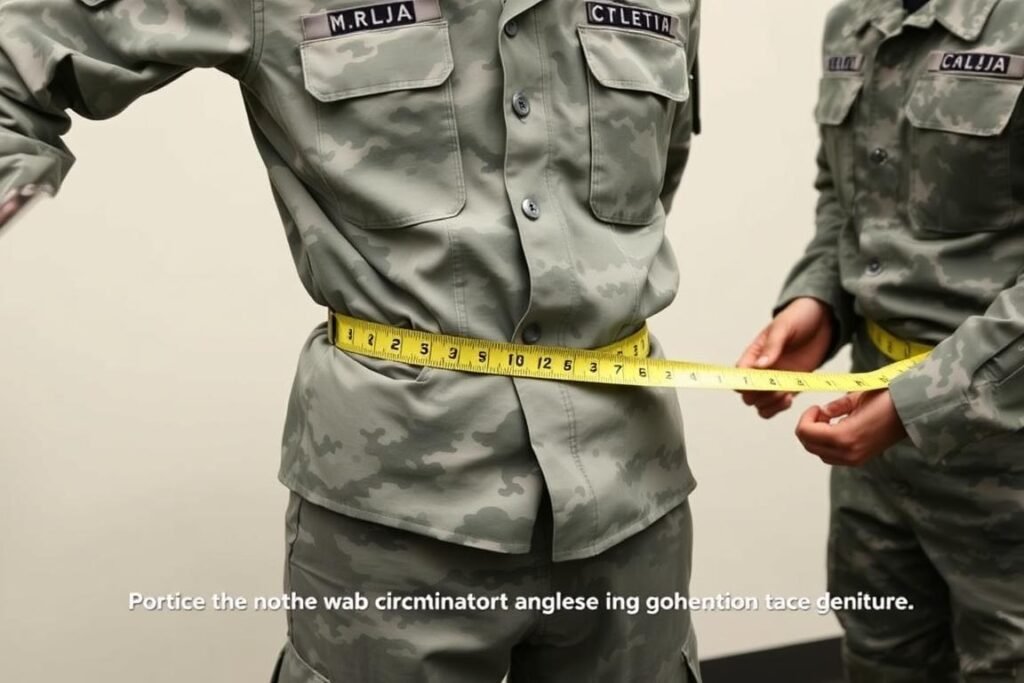
Army Body Fat Calculation Formulas
Formula for Men:
Body fat % = -26.97 – (0.12 × weight in pounds) + (1.99 × abdomen circumference in inches)
Example Calculation (Male):
For a male soldier weighing 210 pounds with a 35-inch waist:
-26.97 – (0.12 × 210) + (1.99 × 35)
-26.97 – 25.2 + 69.65 = 17.48% body fat
Formula for Women:
Body fat % = -9.15 – (0.015 × weight in pounds) + (1.27 × abdomen circumference in inches)
Example Calculation (Female):
For a female soldier weighing 165 pounds with a 30-inch waist:
-9.15 – (0.015 × 165) + (1.27 × 30)
-9.15 – 2.475 + 38.1 = 26.475% body fat
The Previous Multi-Site Tape Test (Pre-2023)
For historical reference, the Army previously used a more complex method requiring additional measurements:
For Men:
86.01 × log₁₀(waist - neck) - 70.041 × log₁₀(height) + 36.76
Measurements in inches
For Women:
163.205 × log₁₀(waist + hip - neck) - 97.684 × log₁₀(height) - 78.387
Measurements in inches
Need to Calculate Your Army Body Fat?
Use our calculator to quickly determine if you meet Army standards using the latest one-site tape test method.
Step-by-Step Guide to Calculate Your Army BMI
Follow these simple steps to accurately measure your body fat percentage according to Army standards:
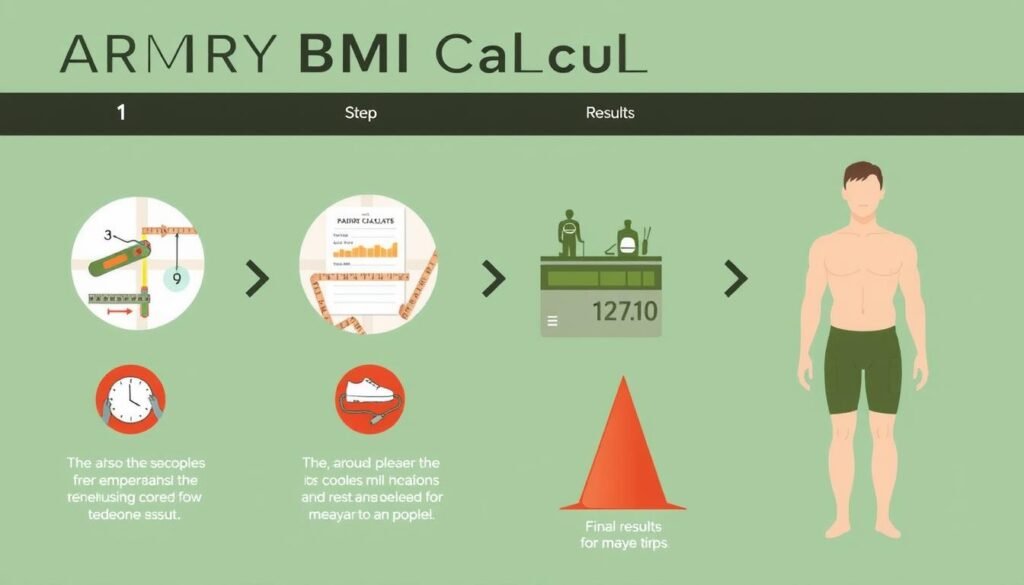
- Gather necessary equipment: You'll need a scale for weight measurement and a non-stretchable tape measure (preferably fiberglass, as recommended by Army regulations).
- Measure your weight: Weigh yourself on a flat surface without shoes. Record your weight in pounds.
- Measure your waist circumference: Stand relaxed and measure horizontally at the level of your belly button (naval). Ensure the tape is snug but not compressing the skin. Record in inches.
- Apply the appropriate formula: Use the male or female formula provided in the previous section.
- Round to the nearest whole percentage: Army standards use whole percentage points, so round your result accordingly.
- Compare to Army standards: Check your calculated percentage against the standards for your age and gender group.
Measurement Tips:
- Take measurements in the morning before eating
- Have someone assist you for more accurate readings
- Keep the tape measure parallel to the floor
- Take multiple measurements and use the average
- Wear minimal, form-fitting clothing
Current Army BMI Standards by Age and Gender
The Army maintains different body fat percentage standards based on age and gender. These standards recognize natural physiological differences and age-related changes in body composition.
Maximum Allowable Body Fat Percentage for Army Service Members
| Age Group | Male | Female |
| 17-20 | 20% | 30% |
| 21-27 | 22% | 32% |
| 28-39 | 24% | 34% |
| 40 and over | 26% | 36% |
Maximum Allowable Body Fat Percentage for Army Applicants
| Age Group | Male | Female |
| 17-20 | 24% | 30% |
| 21-27 | 26% | 32% |
| 28-39 | 28% | 34% |
| 40 and over | 30% | 36% |
Note that the standards for applicants are more lenient than those for active service members. This accommodates the physical transformation that occurs during initial military training, where recruits typically lose body fat and gain muscle mass.
Consequences of Failing to Meet Army BMI Standards
Maintaining appropriate body composition is not optional in the military. Soldiers who exceed the maximum allowable body fat percentage face a structured process designed to help them meet standards while also enforcing accountability.
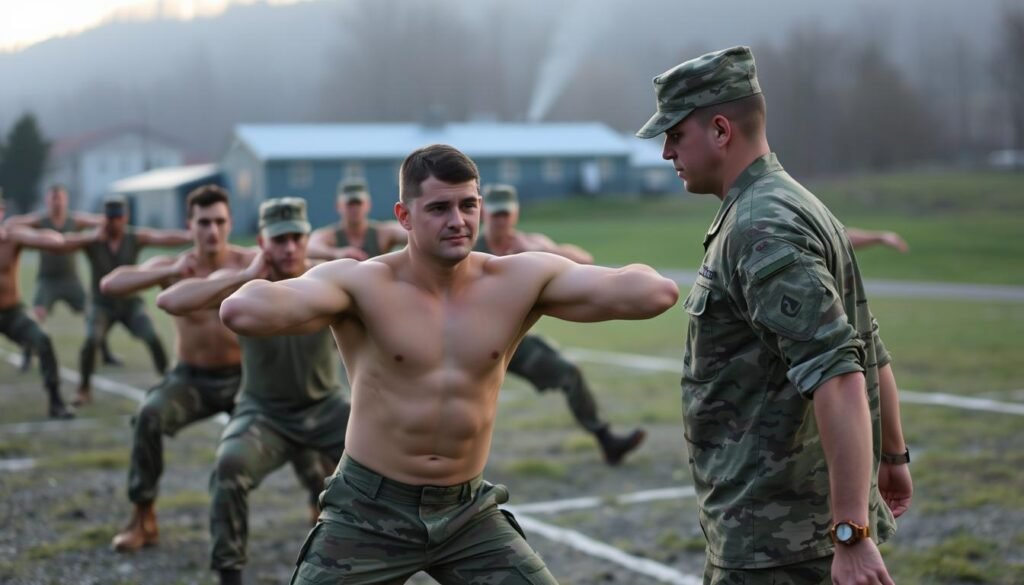
The Army Body Composition Program (ABCP)
Soldiers who fail the body fat assessment are enrolled in the Army Body Composition Program (ABCP), which includes:
- Mandatory participation in a supervised physical training program
- Nutritional counseling and dietary guidance
- Regular progress assessments (typically monthly)
- Development of an individual fitness plan
Administrative Actions
Failing to meet standards can trigger several administrative consequences:
Potential Consequences
- Flag on personnel record
- Ineligibility for promotion
- Restrictions on attending professional military education
- Limitations on reenlistment options
- Potential separation from service after repeated failures
- Ineligibility for certain assignments or schools
Exemptions and Special Considerations
The Army does provide certain exemptions to body fat standards:
- ACFT Excellence: Soldiers who score 540+ points on the Army Combat Fitness Test (with at least 80 points in each event) are exempt from body fat assessments
- Medical Conditions: Documented medical conditions that affect body composition may warrant temporary exemptions
- Pregnancy and Postpartum: Female soldiers receive exemptions during pregnancy and for a specified period postpartum
Tips for Meeting and Maintaining Army BMI Requirements
Whether you're preparing to enlist or working to maintain standards as a service member, these evidence-based strategies can help you achieve and maintain a healthy body composition that meets Army requirements.

Nutrition Strategies
Caloric Management
- Create a moderate calorie deficit (20-25% below maintenance) for fat loss
- Track food intake using a nutrition app
- Focus on nutrient-dense, whole foods
- Practice portion control using hand measurements
Macronutrient Balance
- Consume 0.8-1g of protein per pound of body weight
- Include healthy fats from sources like avocados, nuts, and olive oil
- Choose complex carbohydrates (whole grains, fruits, vegetables)
- Time carbohydrates around training sessions
Exercise Recommendations
Strength Training
- Perform resistance training 3-5 times weekly
- Focus on compound movements (squats, deadlifts, presses)
- Train with weights that allow 6-12 repetitions per set
- Progressively increase weight or repetitions over time
Cardiovascular Training
- Include 2-3 low-intensity cardio sessions (20-60 minutes) weekly
- Add 1-2 high-intensity interval training (HIIT) sessions
- Incorporate military-specific conditioning (rucking, combat fitness)
- Limit total cardio to 2-3 hours weekly to prevent overtraining
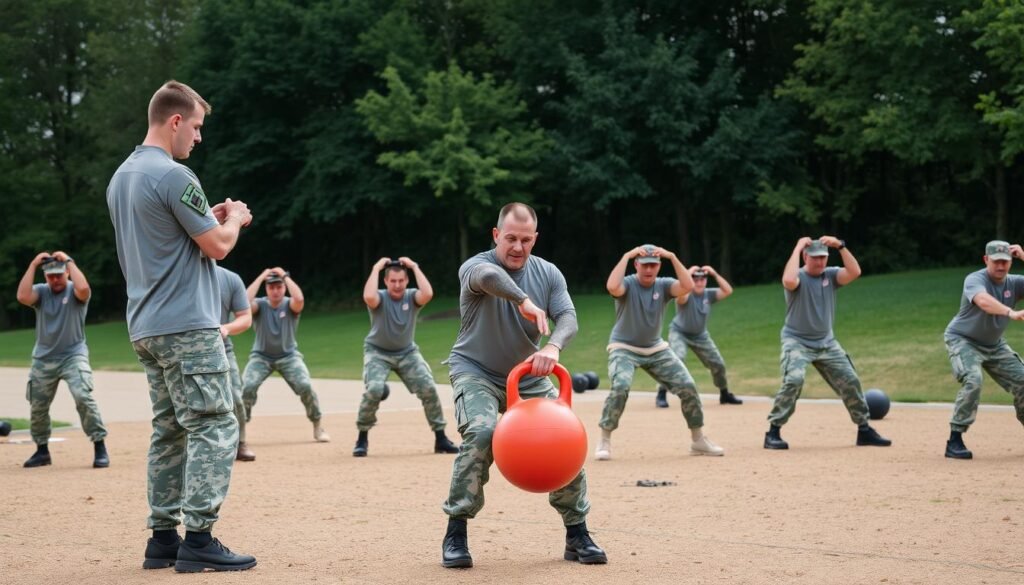
Lifestyle Factors
- Sleep: Aim for 7-9 hours of quality sleep to support recovery and hormonal balance
- Stress Management: Practice stress-reduction techniques like meditation or deep breathing
- Hydration: Drink at least half your body weight (in pounds) in ounces of water daily
- Consistency: Maintain healthy habits even during weekends and leave periods
Need Help Meeting Army Standards?
Get a customized fitness and nutrition plan designed specifically for military body composition requirements.
Civilian vs. Military BMI Standards: Understanding the Differences
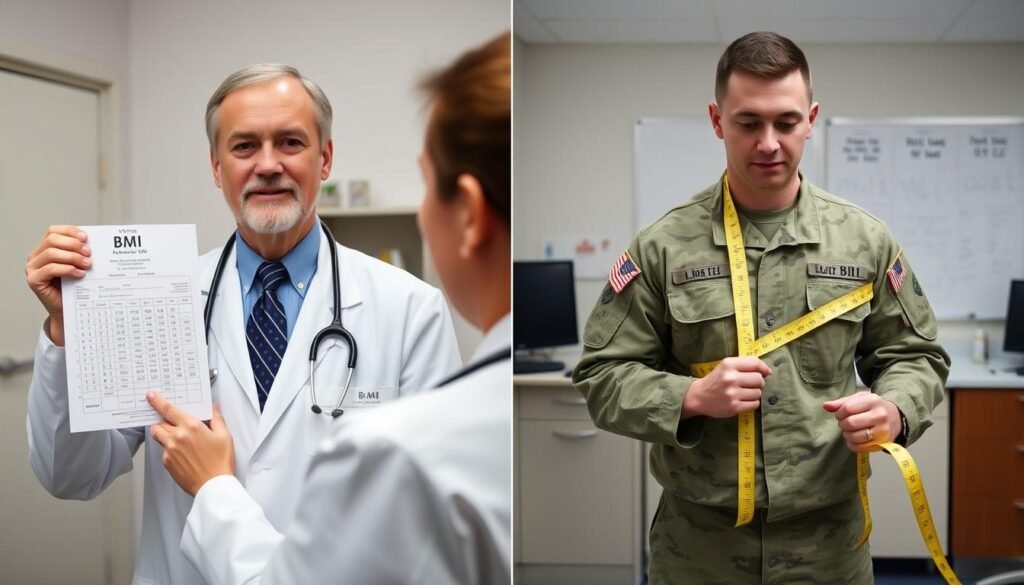
The Army's approach to body composition assessment differs significantly from civilian standards. Understanding these differences helps explain why some individuals may meet one standard but not the other.
| Aspect | Civilian BMI Standards | Army BMI Standards |
| Primary Measurement | Weight relative to height only | Body fat percentage via circumference measurements |
| Classification System | Underweight, Normal, Overweight, Obese | Pass/Fail based on age and gender standards |
| Age Considerations | Same standards regardless of age | Different standards for different age groups |
| Gender Differences | Same calculation for all genders | Different formulas and standards for men and women |
| Muscle Consideration | Does not account for muscle mass | Partially accounts for muscle mass through circumference measurements |
| Purpose | General health assessment | Military readiness and performance capability |
| Consequences | Medical recommendations | Administrative actions affecting career |
The Army's standards are generally more stringent than civilian BMI guidelines, particularly for younger age groups. This reflects the physical demands of military service and the importance of maintaining combat readiness.
Common Misconceptions About Army BMI Calculations
Several misconceptions exist about the Army's body composition assessment methods. Understanding the facts can help soldiers and recruits better prepare for these evaluations.
Misconception: The Army uses standard BMI calculations
Fact: The Army does not use the standard BMI formula (weight in kg ÷ height in meters squared). Instead, it uses circumference measurements and specific formulas to estimate body fat percentage.
Misconception: Muscular soldiers always fail tape tests
Fact: The new one-site tape test introduced in 2023 has improved accuracy for muscular soldiers. Additionally, soldiers who excel on the Army Combat Fitness Test (ACFT) with scores of 540+ points are exempt from body fat assessments.
Misconception: You can "game" the tape test with temporary measures
Fact: While some soldiers attempt to temporarily reduce measurements through dehydration or other methods, these approaches can be dangerous and provide only short-term results. Sustainable body composition changes require proper nutrition and exercise.
Misconception: Body fat standards are the same for all military branches
Fact: Each military branch has its own body composition assessment methods and standards. The Army's standards and calculation methods differ from those used by the Navy, Air Force, and Marines.
Misconception: Failing the body fat test means immediate discharge
Fact: Soldiers who exceed body fat standards are enrolled in the Army Body Composition Program (ABCP) and given time and resources to meet standards. Separation proceedings typically only begin after repeated failures and lack of progress.
Resources for Meeting Army BMI Standards
The Army provides numerous resources to help soldiers and recruits achieve and maintain appropriate body composition. These programs reflect the military's commitment to supporting physical readiness.

Official Army Programs
- Army Wellness Centers (AWC): Provide metabolic testing, body composition analysis, and personalized health coaching
- Holistic Health and Fitness (H2F): Comprehensive program addressing physical training, nutrition, sleep, mental health, and spiritual readiness
- Army Body Composition Program (ABCP): Structured program for soldiers who exceed body fat standards
- Dining Facility (DFAC) Initiatives: Healthy food options and nutritional information in military dining facilities
Online Resources
- Army Public Health Center: Provides nutrition guides, physical activity recommendations, and health resources
- Army Combat Fitness Test (ACFT) Website: Training guides and preparation resources
- Military OneSource: Health coaching and wellness resources for service members and families
- Army Regulations: AR 600-9 (The Army Body Composition Program) and AR 40-501 (Standards of Medical Fitness)

Personnel Support
- Unit Master Fitness Trainers (MFTs): Specially trained soldiers who can provide exercise guidance
- Registered Dietitians: Available at military treatment facilities for nutritional counseling
- Army Physical Fitness School: Develops and disseminates fitness standards and training methods
- Behavioral Health Services: Support for addressing psychological aspects of weight management
Track Your Progress Toward Army Standards
Use our Army BMI calculator regularly to monitor your body composition and ensure you stay within military standards.
Conclusion: Maintaining Military Readiness Through Body Composition
The Army's body composition standards play a vital role in ensuring military readiness and soldier health. While these standards may seem stringent, they reflect the physical demands of military service and the importance of maintaining a force capable of meeting mission requirements.
By understanding how the Army BMI calculator works, the current standards, and effective strategies for meeting these requirements, both current service members and potential recruits can better prepare themselves for success in the military. Regular assessment, proper nutrition, consistent physical training, and utilization of available resources all contribute to achieving and maintaining the body composition necessary for military service.
Whether you're considering enlistment, currently serving, or simply interested in military fitness standards, the information provided in this guide offers valuable insights into the Army's approach to body composition and physical readiness.